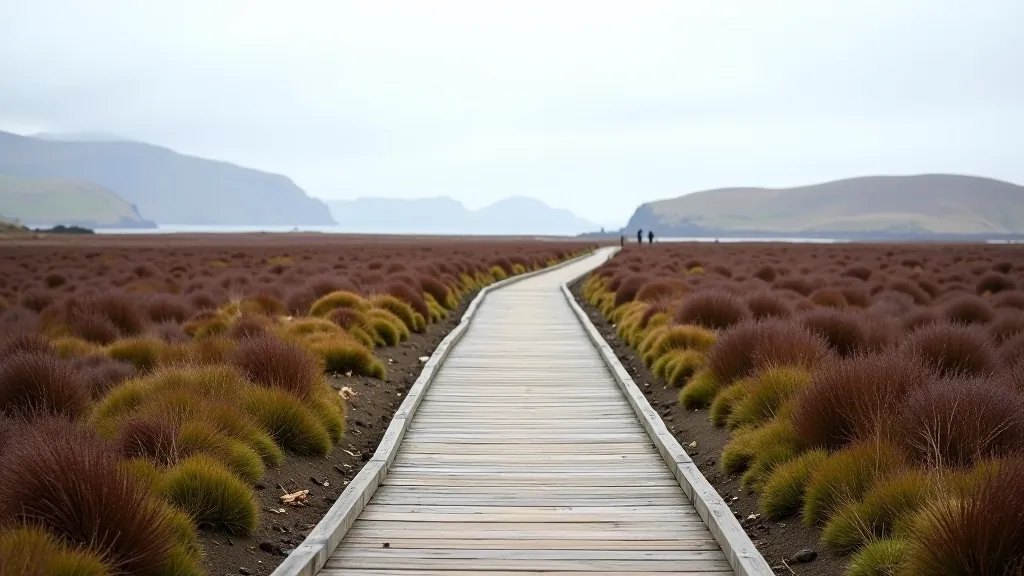
Ballycroy National Park Boardwalks — The Easiest Route
A completely flat, fully accessible boardwalk through protected bog. No stairs, no uneven ground, just a straightforward walk through wild landscape.
This isn't flat, but it's worth the effort. The loop takes about 90 minutes at a relaxed pace. Views of three lakes and the Atlantic make it memorable.
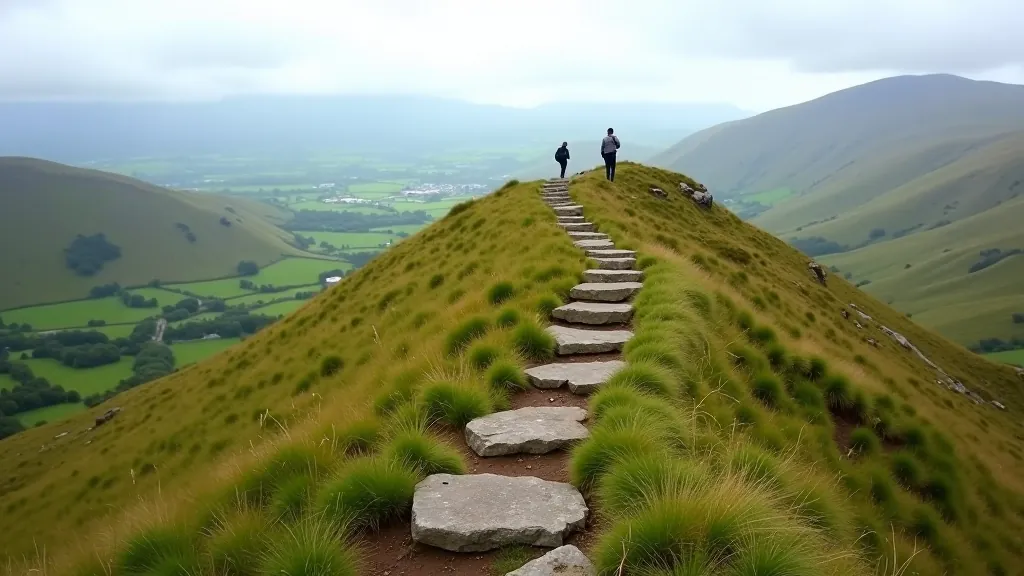
Diamond Hill is one of those walks that looks more challenging than it actually is. Sure, there's elevation gain — about 400 metres — but it's spread across the full loop so you're never gasping for breath. The real reward? You're walking through Connemara National Park, surrounded by bogland that shifts color with the seasons, and on a clear day you can see straight to the Atlantic. We're talking proper views here, not just a nice field.
The path is well-marked with white posts and maintained by the park. It's popular enough that you won't feel lost, but quiet enough that you can actually hear yourself think. Most people start early and finish by lunchtime, which means you can grab a bite in Letterfrack village afterward.
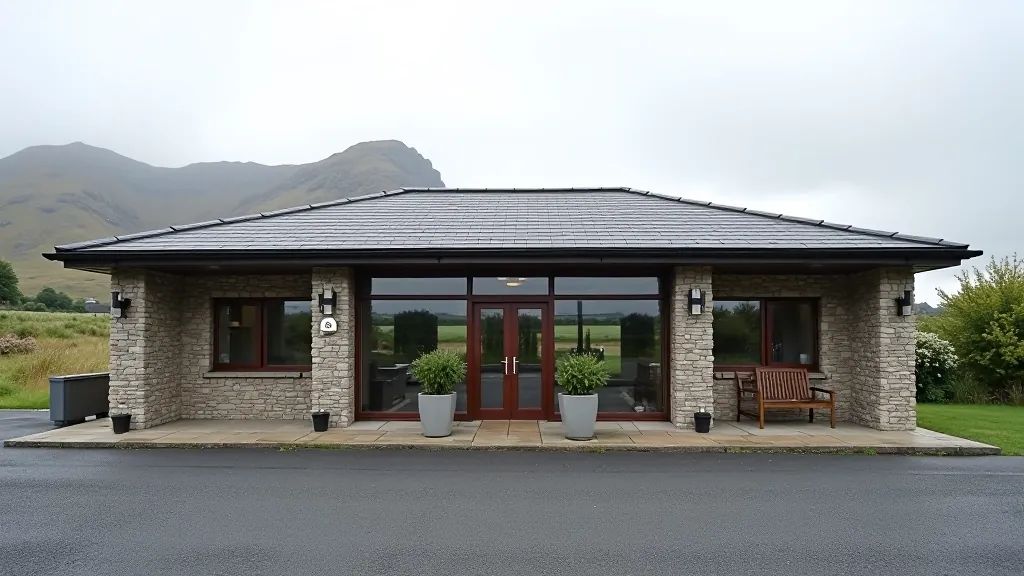
The car park is at Letterfrack, about 3 kilometers north of Letterfrack village itself. You'll find proper facilities — a visitor center with toilets, a small café, and a shop with maps and water. The walk starts right from the car park, so there's no navigating through town or hunting for a trailhead.
Parking's straightforward. The main lot fills up by mid-morning on weekends, but there's an overflow area just beyond it. Cost is around €5 per vehicle (though that changes seasonally). Once you've parked, you're ready to go. The path begins clearly marked, and within 10 minutes you're past the initial boggy section and into the real climb.
The visitor center sells walking poles. If you've got dodgy knees or ankles, grabbing a pair makes the descent noticeably easier. They're inexpensive and worth it for the confidence alone.
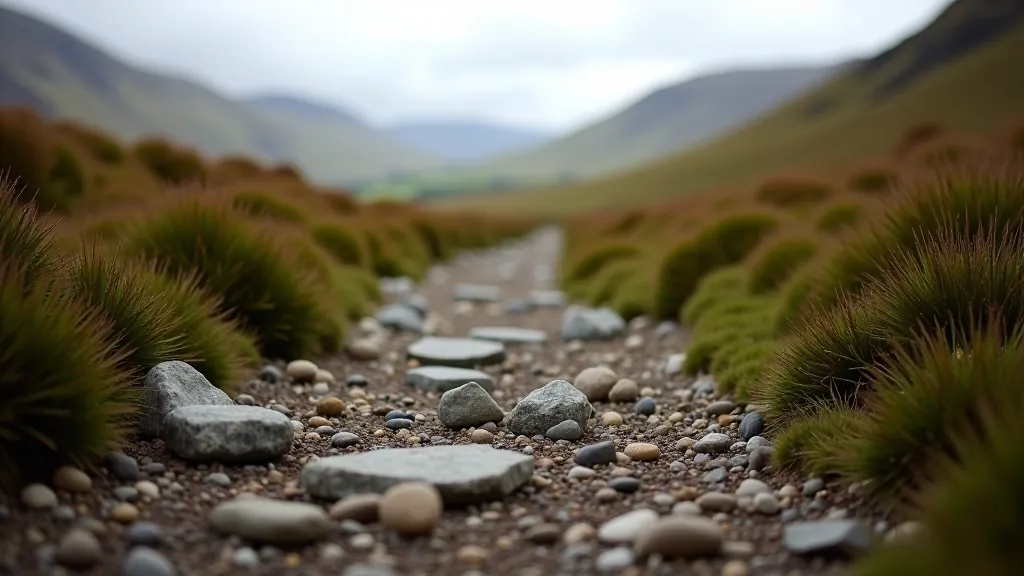
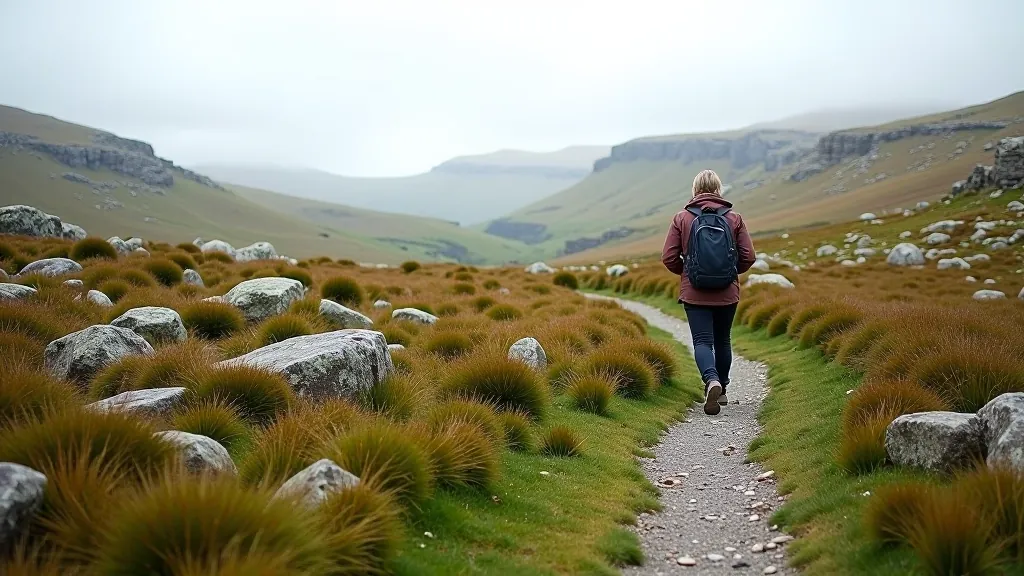
The first 20 minutes climb through rough bog. It's not muddy — the path is compacted and generally dry — but it's definitely uneven. This is where your pace will be slowest. The gradient is gentle though, nothing steep. You're moving uphill but at a walk, not a scramble.
Around the 25-minute mark the terrain shifts. You'll notice exposed stone becoming more common, and the vegetation changes from bog grasses to mountain plants. The path becomes firmer underfoot. The climb continues but feels less relentless. By the time you reach the ridge (about 45 minutes in), you've done most of the elevation work.
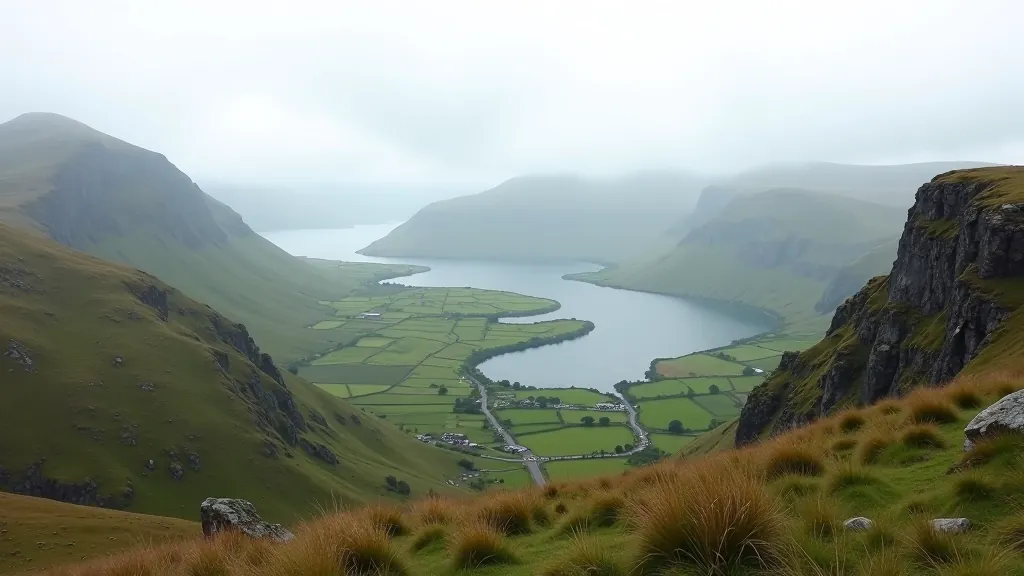
The ridge walk is the best bit. Flat or gently undulating for about 20 minutes, with views opening up on both sides. You can see Ballyconeely Bay to the south and the Maumturk Mountains to the east. On a clear day — and you want a clear day for this walk — it's genuinely spectacular.
The descent is the mirror of the ascent but steeper. Loose stones become more common here. This is where most people take their time and where walking poles really help. The path is still clear and well-marked, but you're definitely stepping downhill. Total descent time is about 25-30 minutes.
This article is educational and informational only. Trail conditions, weather, and accessibility change seasonally and with individual circumstances. Always check current conditions with Connemara National Park before visiting. If you have specific health concerns or physical limitations, consult with a healthcare professional before attempting any hiking. Weather in Connemara changes rapidly — bring appropriate gear and be prepared to turn back if conditions deteriorate.
Bring more water than you think you'll need. There's no refill point on the mountain, and climbing uphill in mountain air dehydrates you faster than you'd expect. A 1.5-liter bottle is the minimum. Food-wise, you don't need much — a banana and some biscuits are fine. It's only 90 minutes.
Weather matters here. The mountain's only 442 meters high, but it's exposed. Wind can be significant, and the weather can turn quickly. Check the forecast before you go. A waterproof jacket isn't optional — it's essential. Even on a sunny morning, clouds can roll in within an hour. The visibility difference between clear and cloudy is dramatic, and the ridge walk is significantly less enjoyable if you can't see anything.
The stated time is 90 minutes. That's realistic for a steady pace. If you're going slower — stopping for photos, taking breaks to catch your breath, enjoying the ridge walk — you're looking at 2 to 2.5 hours. That's fine. There's no rush. The park doesn't close the trail at a specific time, but you'll want to start early enough to finish before dark. In May and June that's not an issue, but from September onward you'll want to start by mid-morning.
The best time to go is May through September. The path is more passable, the weather is warmer (though still Irish), and the light lasts longer. Avoid January through March unless you're experienced with mountain walks — the path gets icy and visibility drops significantly.
Morning walks are better than afternoon. The light is better, the wind is typically calmer, and you're fresher. Starting at 10 AM means you're finished by lunch, parking's easier to find, and you've got the afternoon free. Plus, if something goes wrong — a twisted ankle, a weather change — you've still got daylight to sort it out.
Diamond Hill is proof that you don't need to be a serious mountaineer to have a proper mountain experience. The elevation gain sounds intimidating until you actually do it — then you realize it's spread across 45 minutes and never feels relentless. You're not gasping. You're not struggling. You're walking uphill at a normal pace, and somehow at the end you're at 442 meters with views that rival walks twice as hard.
It's also genuinely interesting terrain. You're not on a manicured trail or a paved path. You're walking through actual mountain landscape — bog, stone, exposed rock, proper vegetation. It feels like a real walk, not a tourist route, even though it's popular and well-maintained.
And the views. You get three distinct landscape zones in 90 minutes: bog land below, ridge walk with panoramic views, and then back down through changing terrain. That's variety. That's worth the effort. Most people finish this walk thinking "I could do that again" rather than "thank God that's over." That's the mark of a good walk.